.png)
In poultry production, the moments when you most need answers are rarely convenient. A flock suddenly shows inconsistent respiratory signs; mortality drifts upward in a way that doesn't line up with the usual suspects; a new feed additive or litter amendment is going into the program, and you want to know how it is working in a specific flock. Issues like these tend to arise without warning, and the best time to collect samples is usually right then.
For veterinarians, researchers, and producers, Barnwell Bio's on-demand kits are built for exactly those moments of targeted investigation. Our easy-to-use collection kits can be kept on hand and deployed whenever a deeper look at the microbiome would help guide the next decision.
When Something Doesn’t Add Up
The toughest flock health issues usually aren't caused by a single, obvious pathogen. More often, the picture is unclear: a flock with multiple overlapping clinical signs, a chronic mortality pattern without a specific driver, or a production issue that feels multifactorial.
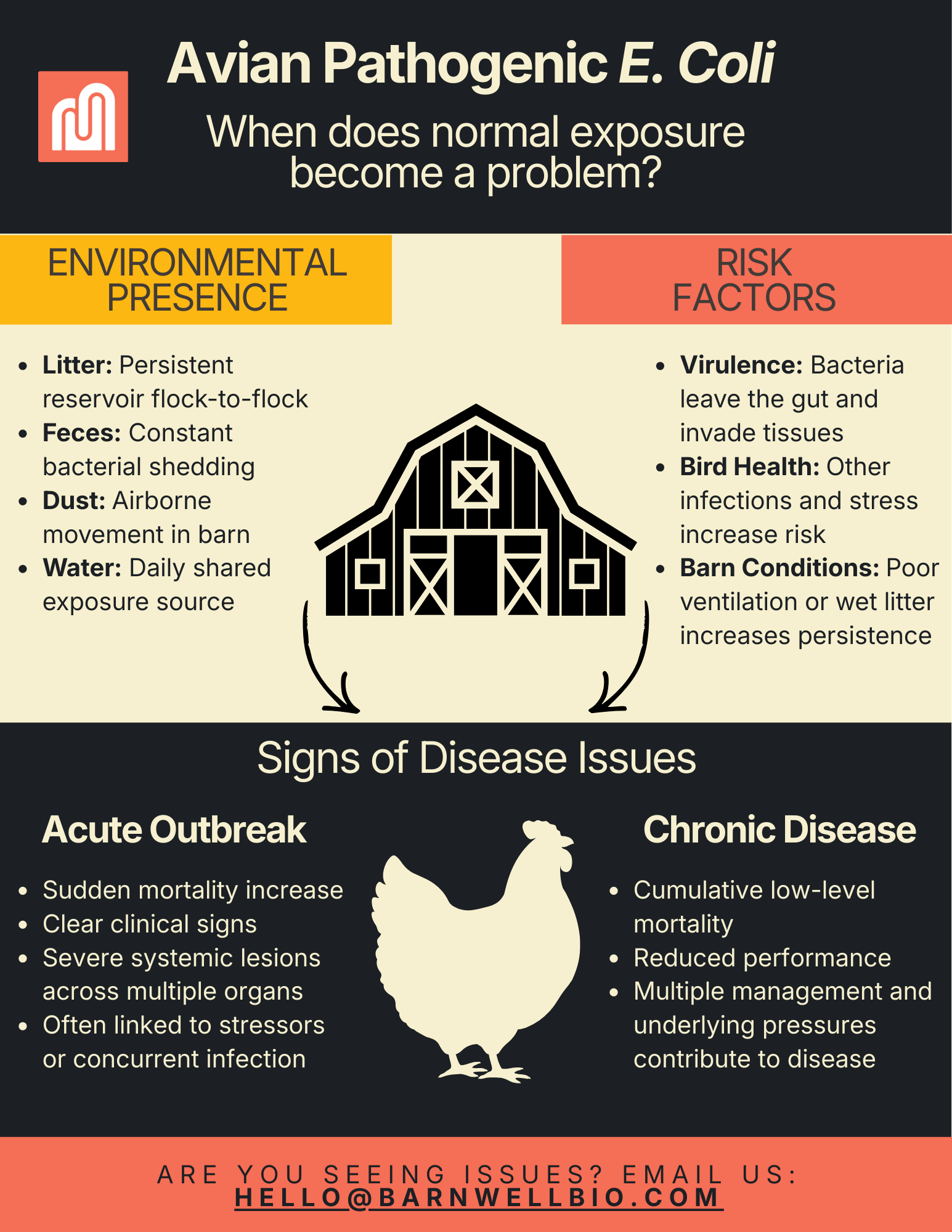
For example, imagine a broiler house begins seeing increased natural mortality alongside scattered respiratory signs. A few birds present with airsacculitis, but the rest appear normal. Is APEC acting opportunistically? Is there a concurrent viral challenge? Is an environmental issue causing the respiratory signs? In situations like this, waiting until more birds show clinical signs or the cause becomes obvious often means the most actionable window has already passed, and in the meantime, mortality keeps climbing and profitability declines.
With a kit already in hand, a producer or veterinarian can collect a sample the day the issues or questions arise and submit them for a whole-microbiome analysis, alongside traditional diagnostics if preferred and receive results in as quick as 7 days after submission. That combination of speed and in-depth data allows you to confirm a suspicion instead of chasing clinical signs.
Designed for Targeted Investigation
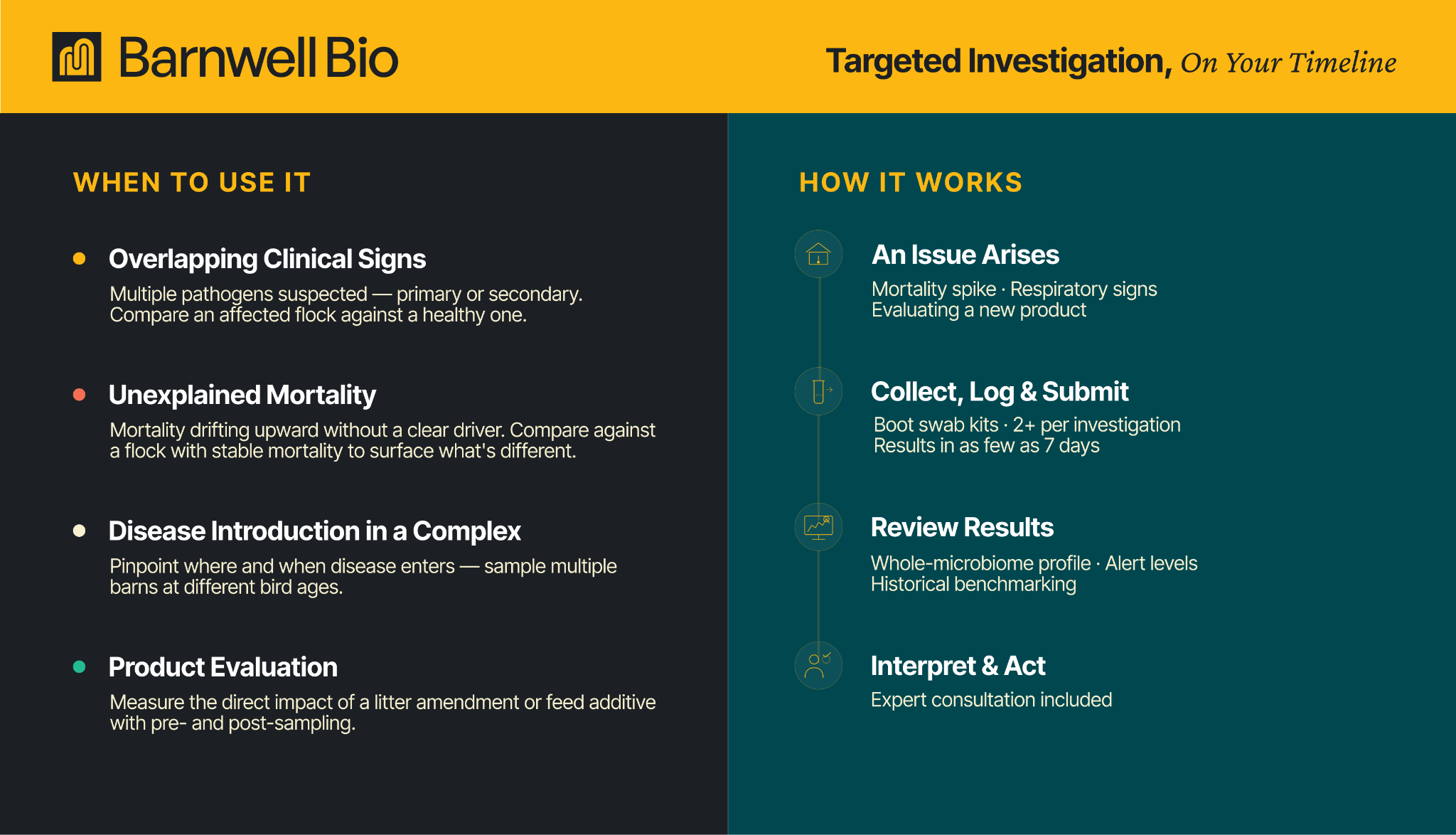
That scenario described above is just one of many. On-hand kits are designed to be flexible and built for any moment when a specific question calls for deeper insight. However, meaningful insights typically come from comparisons, and therefore each investigation generally uses at least two kits. Common use cases include:
- A flock presenting with multiple clinical signs that could involve several pathogens, as primary or secondary infections compared to a flock without clinical signs.
- Increased general mortality or clinical signs that don't cleanly map to a single pathogen compared to a flock with stable mortality.
- Pinpointing where, when, and how disease is being introduced in a complex: which bird age, which barns, and which introduction points through sampling of multiple barns at different ages in a complex.
- Measuring the direct impact of a product of interest, such as a litter amendment or feed additive, within a flock with pre- and post- product of interest sampling.
In each of these cases, microbiome data from easy-to-collect samples can surface the patterns that matter. It is less about finding a single answer and more about building a clearer picture of what is happening in the flock.
More Than Just a Kit
Sample collection is the easy part. What makes targeted investigations genuinely useful is what happens after the samples have been processed at the lab.
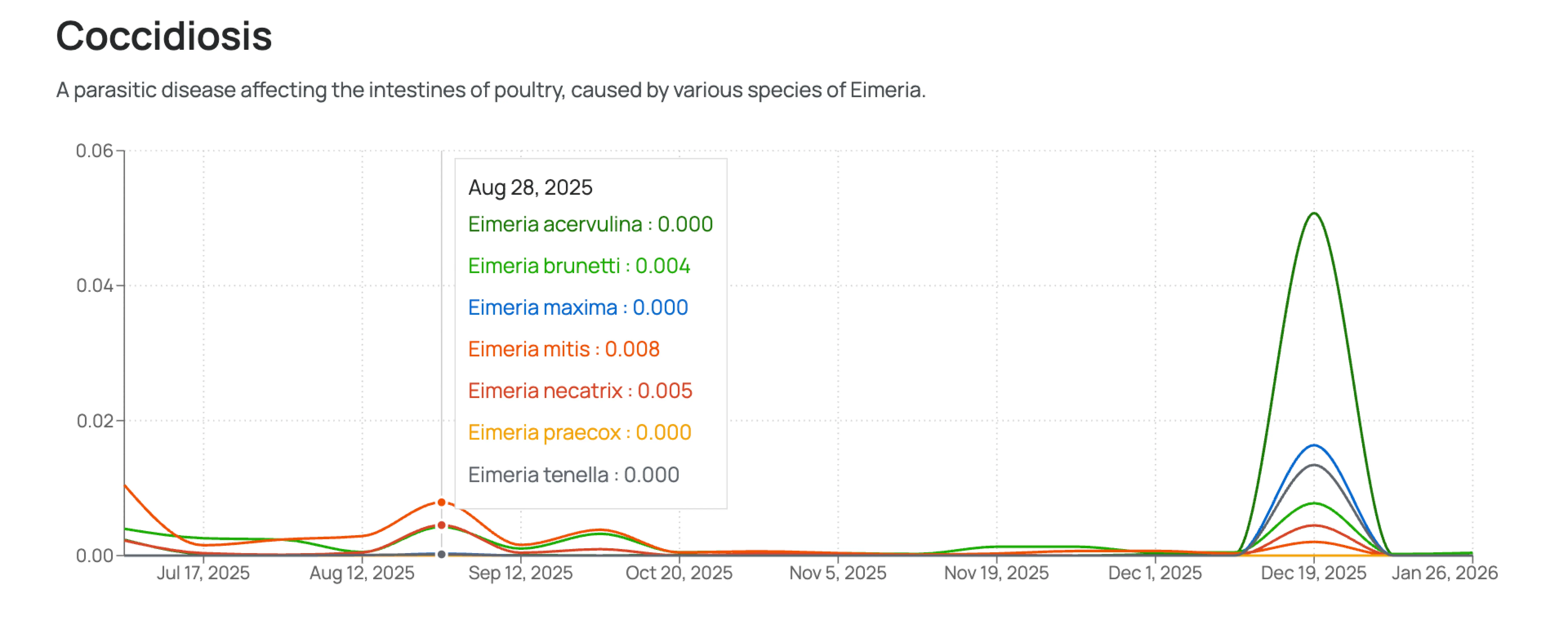
Every kit includes dashboard access that shows the whole microbiome and potential pathogens of concern, with clear, relevant metrics designed to be actionable. Users can also compare results against a growing database of historical and contemporaneous samples, helping to contextualize findings and flag emerging trends or anomalies through alert levels.
Each submission is paired with a short sample collection log that captures the flock and farm context alongside the samples. The log covers four key areas: bird details, environmental and housing management, health inputs (medications, vaccinations, and feed), and clinical observations, including signs, severity, and mortality patterns. That context is what turns a microbiome profile into a useful diagnostic picture. Patterns in the data are only as meaningful as the conditions they reflect, and the log helps our team interpret results against what a veterinarian, producer, or researcher is seeing in the flock.
Just as importantly, results come with support. Our team of computational biologists and veterinarians is available to help with consultation and study design up front, interpret patterns as they emerge, and think through the tougher cases where the data alone doesn’t tell the full story.
Ready When You Are
Disease concerns tend to develop quietly and escalate quickly. Producers and veterinarians know their flocks well, and with the right tools they can stay ahead of emerging issues, ask detailed questions, and get data back fast enough to act. On-hand kits put that capability in-house, ready for the moment a question emerges rather than after it has already become a problem.
The diseases may be complex, but the management doesn't need to be. Having kits on hand means you can start addressing problems the moment they appear. If you'd like to learn more about how on-demand targeted investigations could fit into your program, reach out to us at hello@barnwellbio.com.
Stay tuned for upcoming blogs, where we'll walk through a couple of use cases showing how veterinarians and research teams are putting targeted sampling to work on specific flock challenges.
%201.webp)